

What Actually Makes Someone Good at Packaging Sales?
The best packaging salespeople don't just win orders. They understand which business is worth winning, what their customers really need and how to turn technical knowledge into profitable growth.
A salesperson can hit every target, win major accounts and still be costing their employer money.
In packaging, revenue only tells part of the story. The real test is whether the business being won is profitable, whether the solution works for the customer and whether the manufacturer can deliver it efficiently.
A large account might generate significant turnover but demand tight margins, frequent production changes, urgent deliveries and constant attention. A smaller, more predictable customer could ultimately deliver better returns.
The difference isn't necessarily how well someone sells. It's how well they understand the business behind the sale. And that distinction matters more than ever when manufacturers are balancing growth, production capacity, customer expectations and rising costs.
The customer isn't always asking for the right solution
A customer asks for a cheaper corrugated case. The obvious response is to look at the specification and find ways to reduce the cost. But what if the price of the case isn't the real problem?
Perhaps products are being damaged in transit. Maybe the pallet configuration is inefficient, the cases aren't stacking properly, or the dimensions are increasing transport and storage costs. Reducing the board specification might save money per case while leaving the bigger problem untouched.
A better salesperson investigates what's happening. Reviewing the case design, dimensions and stacking performance could reduce damage, improve distribution efficiency and lower the customer's overall costs. That creates an opportunity to compete on value rather than simply offering a cheaper product.
The same principle applies across flexible packaging, labels, cartons and other formats. A customer requesting a lighter pack might be looking to reduce material costs, meet sustainability targets, maintain barrier performance or resolve problems on a filling line.
These are very different challenges, and each requires a different response.
This is where technical understanding becomes a genuine sales advantage. A salesperson doesn't need to be the company's leading technical expert, but they should know enough about substrates, specifications, production constraints and end use applications to ask the right questions and involve the right people.
The best salespeople don't just respond to a brief. They understand the problem behind it and recognise when a different solution could deliver a better result.
A big account can be bad business
Winning a major customer is an achievement, but the turnover attached to that account doesn't necessarily reflect its value to the manufacturer.
Material costs, machine time, setup waste, transport, credit terms, quality claims and service requirements all affect profitability. Frequent short runs, last minute changes and demanding delivery schedules can place considerable pressure on production. If those demands aren't reflected in the price, the business may be sacrificing both margin and valuable capacity to retain the account.
That doesn't mean a demanding customer is automatically a bad customer. A strategically important account may justify additional investment, and there can be sound commercial reasons to accept lower margins in certain circumstances. What matters is understanding the trade off rather than assuming that more revenue always means better business.
Good packaging salespeople recognise when they need input from estimating, production or finance. They understand that an order must work beyond the point at which it is signed.
For sales directors and managing directors, this is an important distinction. Two salespeople might generate the same turnover, yet one could be building profitable, sustainable accounts while the other is creating work that is difficult to produce and expensive to service.
A strong salesperson doesn't just ask how much business they can win. They ask how much value that business will create.
Customers need insight, not another sales pitch
Buyers can research suppliers, compare products and gather information before speaking to a salesperson. Simply explaining what a company manufactures or sending another quotation is unlikely to create much differentiation.
The value comes from what the salesperson brings to the conversation.
Gartner's 2025 survey of 632 B2B buyers found that 61% preferred an overall buying experience without sales representatives. The survey also found that 73% actively avoided suppliers sending irrelevant outreach, while 69% reported inconsistencies between supplier website information and what salespeople told them.
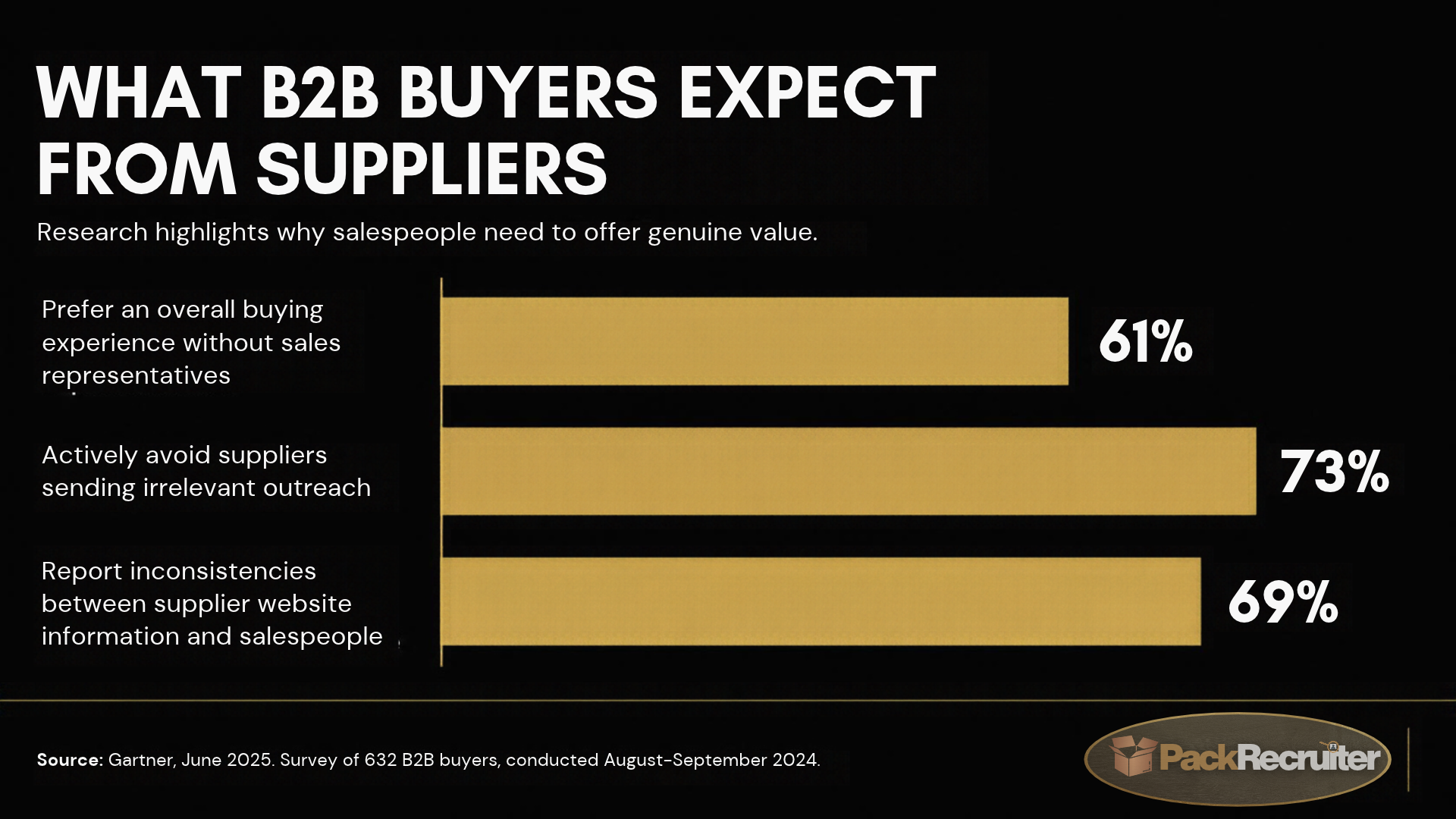
These findings cover B2B buying generally, rather than packaging specifically, but they highlight an important point: customers expect relevant information and a reason to engage.
In packaging, that might mean understanding a customer's product launch plans, identifying opportunities to improve an existing specification, recognising changing customer requirements or explaining the commercial implications of a proposed material change.
It also means understanding the customer's business well enough to recognise when an opportunity exists, rather than contacting them simply because it has been a few weeks since the last conversation.
The strongest salespeople build relationships by being useful, following through on commitments and bringing something worthwhile to the table. Over time, they become people customers consult before making decisions, not just suppliers they approach when they need a price.
Technical knowledge and commercial judgement go hand in hand
Packaging decisions rarely come down to one factor. Cost, protection, production efficiency, shelf life, sustainability and customer requirements can all pull in different directions.
Recyclability is a good example. A pack may use a material that is widely recycled, but its actual recyclability can depend on its construction, coatings, adhesives, contamination and the recycling infrastructure available. A change intended to improve sustainability could also affect barrier performance, shelf life, production speeds or the amount of material needed.
A capable salesperson understands that there are trade offs to consider. Rather than making broad promises, they help the customer understand the options and bring in technical expertise when needed.
The wider industry figures illustrate why these conversations matter. Defra's UK packaging recycling statistics for 2024 reported recycling rates of 84.1% for paper and cardboard, 79.1% for glass, 78.7% for metal and 53.5% for plastic.
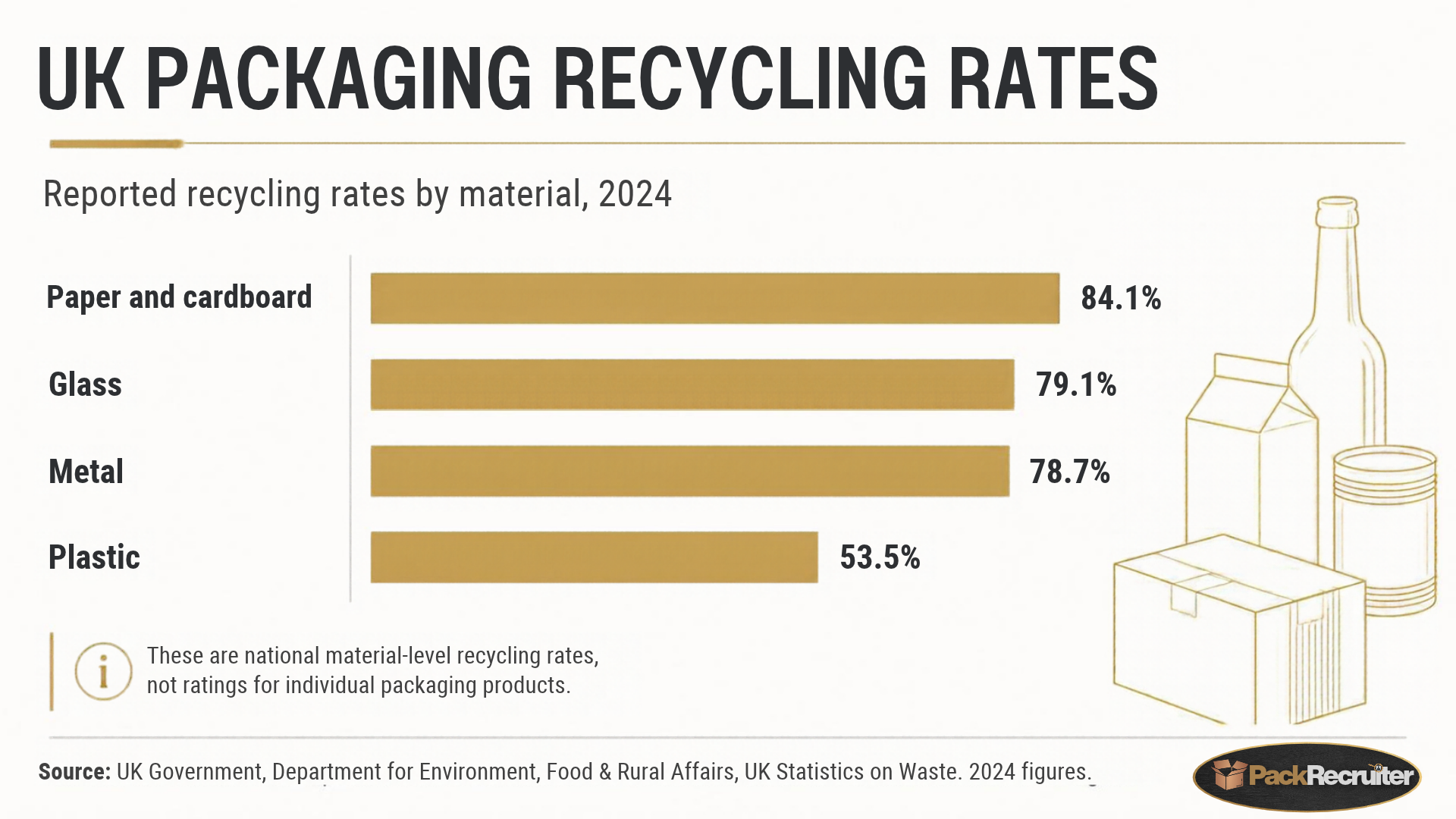
These are national recycling rates for packaging materials, not guarantees that an individual pack will be recycled. They nevertheless demonstrate why material choice and end of life considerations need to be understood in context.
There are also direct commercial pressures. In its State of Industry Q1 2025 report, the Food and Drink Federation found that 87% of surveyed food and drink manufacturers expected to pass some or all packaging Extended Producer Responsibility costs on to customers. Meanwhile, 45% expected lower profits and 19% expected to switch to cheaper packaging materials or formats.
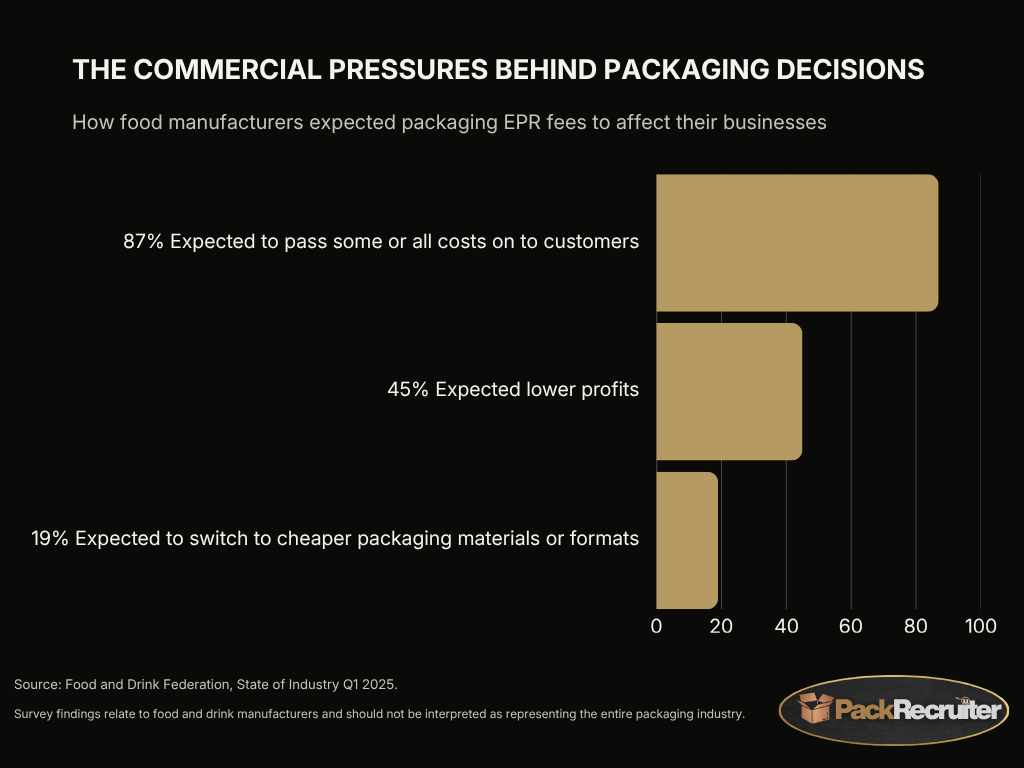
These figures reflect manufacturers' expectations at the time of the survey, rather than measured outcomes across the entire packaging market. They illustrate the pressures that can influence customer decisions and create opportunities for informed suppliers.
The best packaging salespeople connect these technical and commercial considerations. They understand enough to recognise the issues, ask informed questions and help customers evaluate the alternatives. They know when a change could deliver genuine value and when it could introduce costs or risks elsewhere.
Knowing when not to sell can be just as valuable
Salespeople are usually judged on the business they bring in. But judgement also shows in the opportunities they challenge, renegotiate or decide not to pursue.
That might mean questioning a deadline that cannot realistically be met, raising a quality risk before production begins or recognising that the margin doesn't justify the level of service required. It could mean proposing an alternative rather than accepting a specification that creates unnecessary cost.
This isn't about being reluctant to win business. It's about being commercially ambitious without being reckless.
A salesperson who repeatedly secures orders that production struggles to deliver can create problems across the business. One who identifies risks early can protect margin, capacity, customer relationships and the manufacturer's reputation.
Sometimes, the most valuable contribution is preventing the wrong order from being taken in the first place.
What should you look for when recruiting packaging salespeople?
A strong sales record matters, but the figures alone rarely tell the full story.
Two candidates might have generated similar revenue, yet one may have inherited established accounts while the other built new business from scratch. One may have grown profitable relationships, while the other relied on discounting to secure orders. Their results need to be understood in context, including the markets they worked in, the customers they managed and the opportunities available to them.
When recruiting, look beyond headline figures and explore how candidates actually operate.
Commercial judgement: Can they explain the profitability of the business they have won, as well as the revenue?
Technical understanding: Do they understand the products they sell, their applications and the constraints involved in manufacturing them?
Customer insight: Can they identify the problem behind a request and explain how they helped solve it?
Decision-making: Have they challenged a brief, proposed an alternative or recognised when an opportunity wasn't right?
Collaboration: Can they work effectively with estimating, production, technical teams and customer service to deliver what has been promised?
One particularly revealing interview question is:
“Tell me about a piece of business you chose not to pursue, or an order you challenged. What made you question it, and what was the commercial outcome?”
The answer can reveal a great deal about a candidate's judgement, integrity and understanding of profitability. It also moves the conversation beyond rehearsed sales achievements and into how they actually make decisions.
The emphasis should depend on the role. A new business specialist needs to demonstrate prospecting ability, market knowledge and the skill to open doors. A key account manager needs evidence of account development, retention and commercial planning. A sales director must also show how they build and lead a team that consistently wins the right business.
The important thing is to recruit for the challenges the person will face, rather than relying on a generic list of sales competencies.
The real measure of a great packaging salesperson
The best packaging salespeople combine technical understanding, commercial judgement and genuine customer insight. They help customers make better decisions, recognise opportunities others might miss and understand the impact their promises will have on the wider business.
For packaging manufacturers looking to grow, the question isn't simply whether the sales team can win more orders. It's whether they can win the right business, at the right margin, in a way the business can deliver consistently.
A salesperson's value isn't measured by the orders they win alone, but by the value those orders create. That means understanding what matters to the customer, what works for the manufacturer and how to bring the two together commercially.
At Pack Recruiter, we specialise in recruitment across the packaging industry, from business development and key account management to sales leadership. Understanding the difference between someone who can sell and someone who can create lasting commercial value is an important part of finding the right person for the role.
If you're looking to strengthen your sales team, we'd be happy to discuss what your business needs.
Which one are you?
Would you like to speak to one of our consultants? Fill out this form below: